
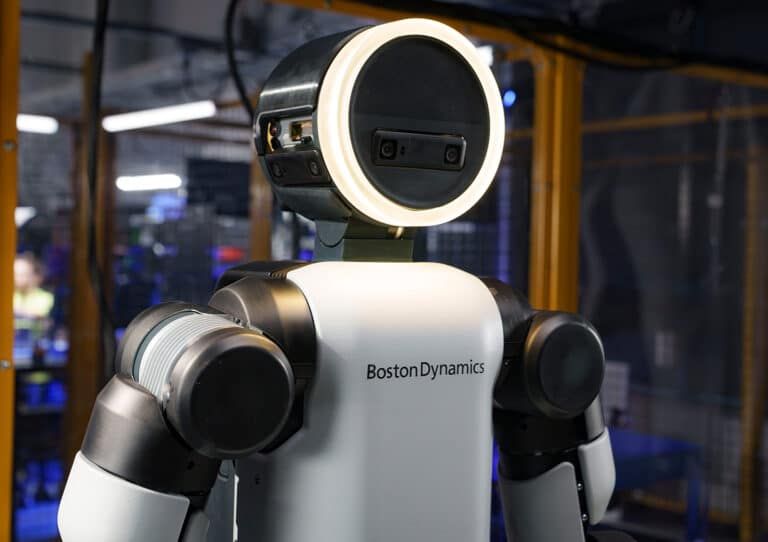
Boston Dynamics started production on the electric Atlas humanoid earlier this year. The first units are shipping to Hyundai and Google DeepMind in 2026, with factory-floor deployment at Hyundai's Metaplant America in Savannah, Georgia targeted for 2028. This is not a concept. It is not a demo reel. It is a commercial humanoid robot going to work in a real manufacturing environment on a real timeline.
That is a significant moment. The robotics industry has been building toward it for years.
But there is a question nobody in the coverage seems to be asking: when one of those robots breaks down at 2am on a Tuesday, who shows up?
The deployment problem nobody is solving
Every major robotics deployment creates the same downstream problem. The robot ships. It gets installed. It starts running. And at some point, it stops running.
That might be a software issue. A sensor calibration. A mechanical failure. A part that needs to be replaced. Whatever the cause, the deployer needs someone on-site, with the right skills, fast. Because in food service, warehouse logistics, automotive manufacturing, or any other operation that depends on robots to function, downtime is expensive. Downtime costs thousands of dollars per hour and in some environments, it shuts down an entire line.
OEMs are not built to solve this problem at scale. Robot manufacturers are focused on product development, manufacturing, and sales. Building a national field service organization is expensive, distracting, and far outside their core competency. Most offer limited service with response times of 48 to 72 hours. As deployments grow, that model breaks down entirely.
Deployers are not equipped to solve it either. Companies running commercial kitchens, warehouse operations, or manufacturing facilities do not have robotics technicians on staff. They should not have to. That is not their business.
The result is a gap. A growing, expensive, largely unaddressed gap in the infrastructure that every commercial robotics deployment depends on.
This gap exists across every vertical
The Atlas story gets the headlines, but the deployment problem is not unique to humanoids. It is already happening in every vertical where commercial robots are being deployed today.
Food service robots are running in commercial kitchens across the country. When they go down mid-service, the kitchen stops. Agricultural robots are operating in the field. When they fail during harvest, the window to act closes fast. Warehouse AMRs are sorting and picking around the clock. When they stop moving, fulfillment backs up.
These are not hypothetical scenarios. They are happening now, with the robots that are already deployed, not the ones coming in two years.
The humanoid wave will accelerate the problem significantly. But the problem is not waiting for humanoids to arrive.
What Robo Reliance is building
Robo Reliance is the third-party field service and maintenance company for commercial, industrial, and home robotics. We are the independent service layer between robot manufacturers and the businesses deploying them.
We operate a nationwide network of 1099 independent technicians. They handle installation, preventive maintenance, and break-fix repair across food service, warehouse and logistics, agriculture, healthcare, drones, and emerging humanoid platforms. We are OEM-agnostic. We are capital-light. And we were built specifically to fill the gap that every OEM and every deployer runs into.
Our model is simple. Instead of building an internal field service team, or waiting on an OEM's backlogged support queue, clients work with us. We handle the service infrastructure. They focus on their core business.
Program management is included. Response is built into the service agreement. And because we use a contractor network rather than a fleet of W-2 employees, we can scale coverage to new geographies without adding headcount or overhead.
Our anchor client is Chef Robotics, a company that builds AI-powered food preparation robots deployed in commercial kitchens nationwide. That relationship is live, revenue-generating, and validates the model in the field.
Why now matters
The commercial robotics market is accelerating. Deployment is outpacing service infrastructure. And the companies that are deploying robots today are already running into the limits of what OEM support can provide.
There is no established third-party field service provider for commercial, industrial, and home robotics. That is not a problem to solve in the future. That is the opportunity we are building into right now.
When Atlas and the robots like it move into production environments at scale, the service gap does not disappear. It gets larger. The operators who plan for that now, and build relationships with a capable service partner before they need one urgently, will be in a fundamentally better position than the ones who figure it out after their first major downtime event.
For operators and OEMs
If you are deploying commercial robots and do not have a field service plan that goes beyond calling the manufacturer, we should talk. We can cover your install, your scheduled maintenance, and your emergency repairs. One partner. One escalation path. No headcount required on your side.
Reach out to Scott Kegerreis at scott.kegerreis@roboreliance.com or call (800) 838-0156.
For investors
We are building the service infrastructure for a market that is growing whether or not we exist. The question is who builds it. We are raising a seed round. For the investor kit, contact Steve Urban at steve.urban@roboreliance.com.
Robo Reliance LLC is a Colorado-based field service company providing installation, maintenance, and repair for commercial, industrial, and home robotics platforms. We keep robots running.
roboreliance.com