
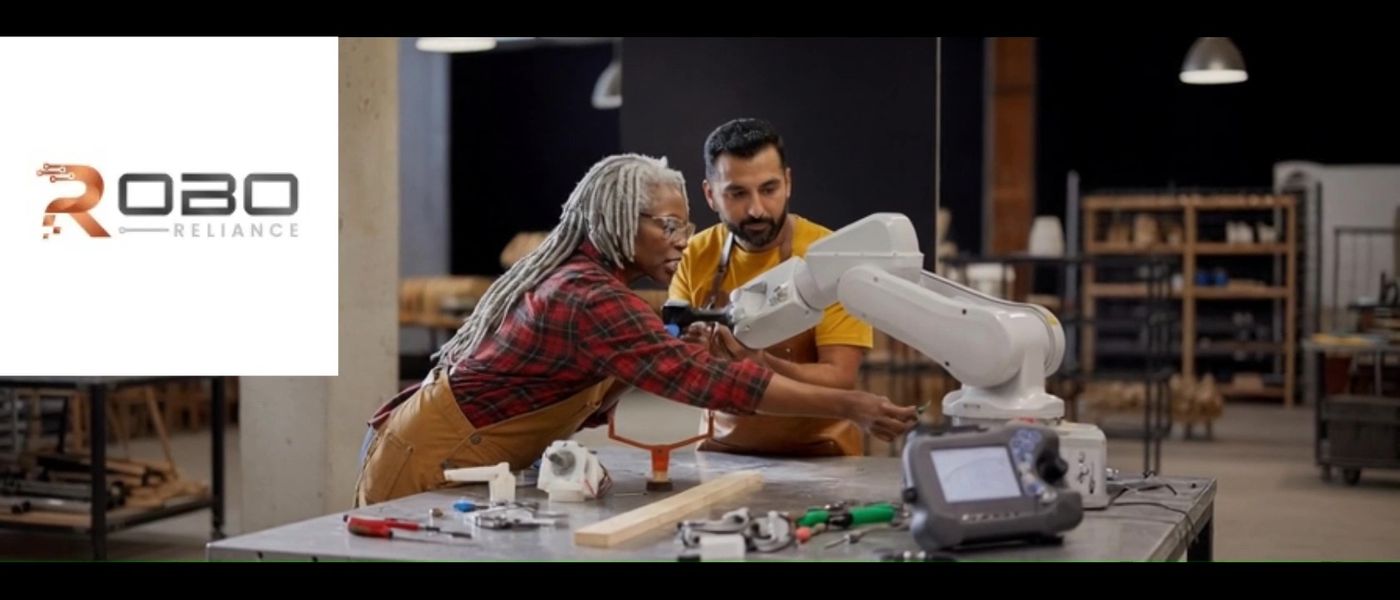
Robots are being deployed across commercial kitchens, warehouses, farms, and hospitals faster than the industry can support them. Every one of those robots eventually needs a person on site with the right skills and the right tools. That person is a robotics field technician, and right now there are not nearly enough of them.
If you work with your hands, understand how machines fail, and want into one of the fastest growing trades in the country, this is for you. Here is what the work actually looks like and what it takes to do it.
What the job actually is
A robotics field technician installs, maintains, and repairs deployed robots in customer environments. Not in a lab. Not on a factory line. In a working commercial kitchen during prep hours, on a warehouse floor between shifts, at a customer site where the robot is part of daily operations.
The work breaks into three categories.
Installation. New deployments need setup, calibration, and commissioning. You are the person who takes a robot from a crate to a working machine.
Preventive maintenance. Scheduled visits to inspect, clean, calibrate, and replace wear components before they fail. This is the steady, recurring work.
Break-fix repair. A robot goes down, the customer is losing money, and you get dispatched to diagnose and fix it. This is where the best technicians separate themselves. You arrive at a machine you may have never seen fail this way before, and you figure it out.
What backgrounds translate
You do not need a robotics degree. Most of the people doing this work well came from somewhere else. The backgrounds that translate directly:
Electromechanical and mechatronics technicians. The closest fit. Motors, sensors, actuators, control systems. You already speak the language.
HVAC and appliance repair. You diagnose systems under pressure in occupied buildings, manage customers, and work independently. That is most of the job already.
Automotive and diesel technicians. Modern vehicles are rolling robots. If you can chase an intermittent electrical fault through a CAN bus, you can troubleshoot a service robot.
Military maintenance. Avionics, ground systems, weapons systems, comms. Military maintainers are trained to follow technical procedures exactly and adapt when the manual runs out. Both matter here.
Industrial maintenance and controls. PLCs, drives, conveyors, automation cells. The commercial robotics world is the next step in the same direction.
What ties these together is a way of thinking. You isolate variables. You trust the meter, not the assumption. You read the documentation before you start pulling panels. If that describes how you work, the specific platform can be trained.
What the work demands
Honest picture. Field service is not bench work.
You travel. Service regions can cover a metro area or several states. Some jobs are scheduled weeks out. Some are same-day dispatches.
You work alone. There is no supervisor at the site. You represent the company the moment you walk in the door, and the customer is often standing right there while you work.
You communicate. Half the job is technical. The other half is explaining to a kitchen manager or operations lead what happened, what you did, and what to watch for. Technicians who document clearly and communicate well get requested by name.
You keep learning. Platforms update. New robot types reach the market every year. The technicians who thrive are the ones who treat every new platform as a chance to add a skill that almost nobody else has yet.
How the independent contractor model works
Robo Reliance technicians are 1099 independent contractors, not employees. For the right person, that structure is the draw, not the catch.
You control your schedule and your service area. You take the work that fits. Many of our technicians run their own repair or maintenance businesses and add robotics service as a high-value line of work. Others are building toward that.
We handle what independent technicians usually struggle with alone: client relationships, dispatch coordination, platform-specific training and certification, and a steady pipeline of work from robotics companies deploying nationwide. You bring the skills and the professionalism. We bring the robots.
Why now
Every trade has a moment when getting in early matters. Automotive had it. HVAC had it. IT field service had it. Commercial robotics is having it now.
The companies building robots are scaling deployments faster than anyone is building the service layer underneath them. The technicians who get certified on these platforms in the next few years will be the senior experts when the market is many times its current size. There is no crowded field to fight through. There is open ground.
How to reach us
Robo Reliance is expanding its nationwide technician network. Our recruiting partner Riderflex is managing the search. If you have a background in robotics, automation, electromechanical repair, or any of the trades above, contact marcy.cartmill@riderflex.com.
The fastest way in is to apply on our Join our network page. Regional repair and service companies can apply there too.
We keep robots running. We are looking for the people who do the keeping.