
By The Robo Reliance Team
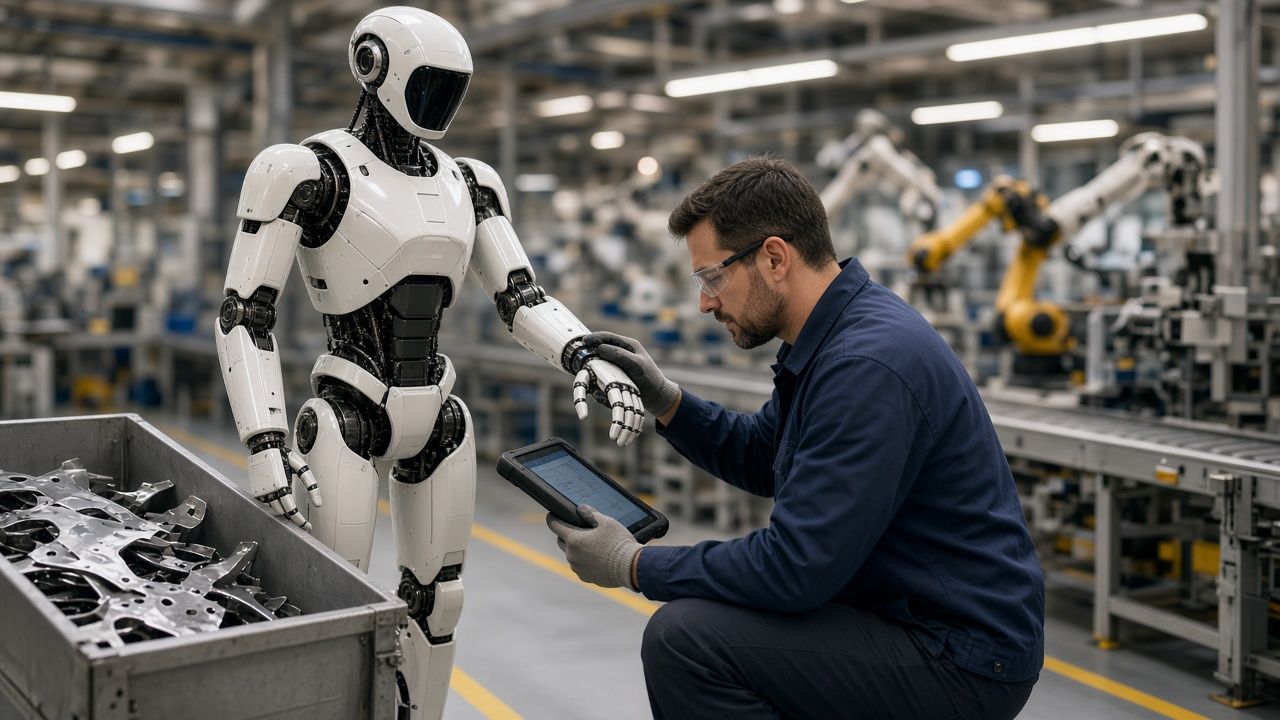
Humanoid robots have moved from trade show stages to real factory floors faster than most people expected. Figure has reported that its Figure 02 units completed an 11-month pilot at BMW's Spartanburg plant, logging more than 1,250 operating hours and loading more than 90,000 sheet metal parts on ten-hour shifts. BMW has said it plans to bring humanoids to its Leipzig plant as well. Agility Robotics has reported its Digit robots passing 65,000 operating hours across customer sites.
Those are real milestones, and they deserve credit. They also answer a narrower question than most buyers think. Operating hours tell you a robot ran. They do not tell you how much human help it needed to keep running, what broke along the way, or who fixed it.
If you are evaluating a humanoid pilot right now, that second set of questions is the one that decides whether a fleet of fifty works as well as a pilot of two.
What a pilot hides
A pilot is designed to succeed. It runs on a carefully chosen task, often with the manufacturer's engineers close by, sometimes on site. When something goes sideways, the people who built the robot are the ones who fix it, quickly and quietly.
That is not a criticism. It is how pilots work for every kind of automation. But it means the pilot rarely tests the things that matter at scale: what happens when the engineers go home, when the task drifts, when a joint actuator wears out at 2 a.m. on a Saturday, and when your team has to decide whether to restart, recalibrate, or call someone.
Humanoids add a few wrinkles on top of what fleet owners already know from arms and mobile robots. They have more joints, more actuators, and more sensors per unit. Hands in particular are mechanically complex and take a beating. Balance and perception depend on calibration that can drift. And because the whole point of a humanoid is to work in spaces built for people, it will bump into more variation than a robot in a fenced cell.
Do the assist math before you scale
Here is a simple exercise worth running on any pilot data you can get.
Say a humanoid works one ten-hour shift, five days a week. That is 50 scheduled hours a week. Now say it needs three human assists per shift, a nudge, a reset, a cleared fault, averaging ten minutes each. That is 30 minutes per shift, or 5 percent of scheduled time. Across five shifts, it is 2.5 hours of someone's attention every week, per robot.
At two pilot units, that is 5 hours a week, easy to absorb. At 20 units, it is 50 hours a week, more than one full-time person doing nothing but assists. And that is before a single real repair.
The numbers in your operation will be different. The point is that assist time scales with the fleet, and a pilot that felt effortless can turn into a staffing line item nobody budgeted. Ask the vendor for intervention data, not just operating hours: how many assists per shift, how long each one took, and who performed them.
Questions to settle before the purchase order
Who does first-level work on site? Resets, cleaning, simple part swaps, and basic diagnostics should not wait for a specialist. Decide who on your team owns that, and get them trained during the pilot, not after.
What is the service model after the pilot ends? Find out in writing who responds to failures, what they cover, how parts are supplied, and what happens if the support team that ran the pilot moves on to the next customer.
Which parts wear, and how many spares do you need? Hands, grippers, actuators, and batteries are the likely candidates. Ask for expected replacement intervals and lead times, then stock against your planned run hours.
How are faults logged? You want your own record of every stop, every assist, and every repair. That data is what lets you tell the difference between a bad unit, a bad task, and a bad process.
How does it fit with what you already run? Most floors that add humanoids will still run arms, mobile robots, and conveyors. Someone has to keep all of it working together, across brands.
The service question comes first now
Every wave of automation has followed the same arc. The industry celebrates deployments, then discovers that keeping robots running is a separate business with its own skills, parts, and people. Humanoids will follow that arc too. The operators who do well will be the ones who planned for service before the second purchase order, not after the first long outage.
That is the work Robo Reliance does: vendor-agnostic, multi-brand field service and preventive maintenance for robot fleets, so the robots you bought keep doing the job you bought them for. If you are piloting humanoids or planning to scale any fleet, we are glad to help you think through the service side before it becomes urgent.
https://www.roboreliance.com | 800-838-0156 | info@roboreliance.com