
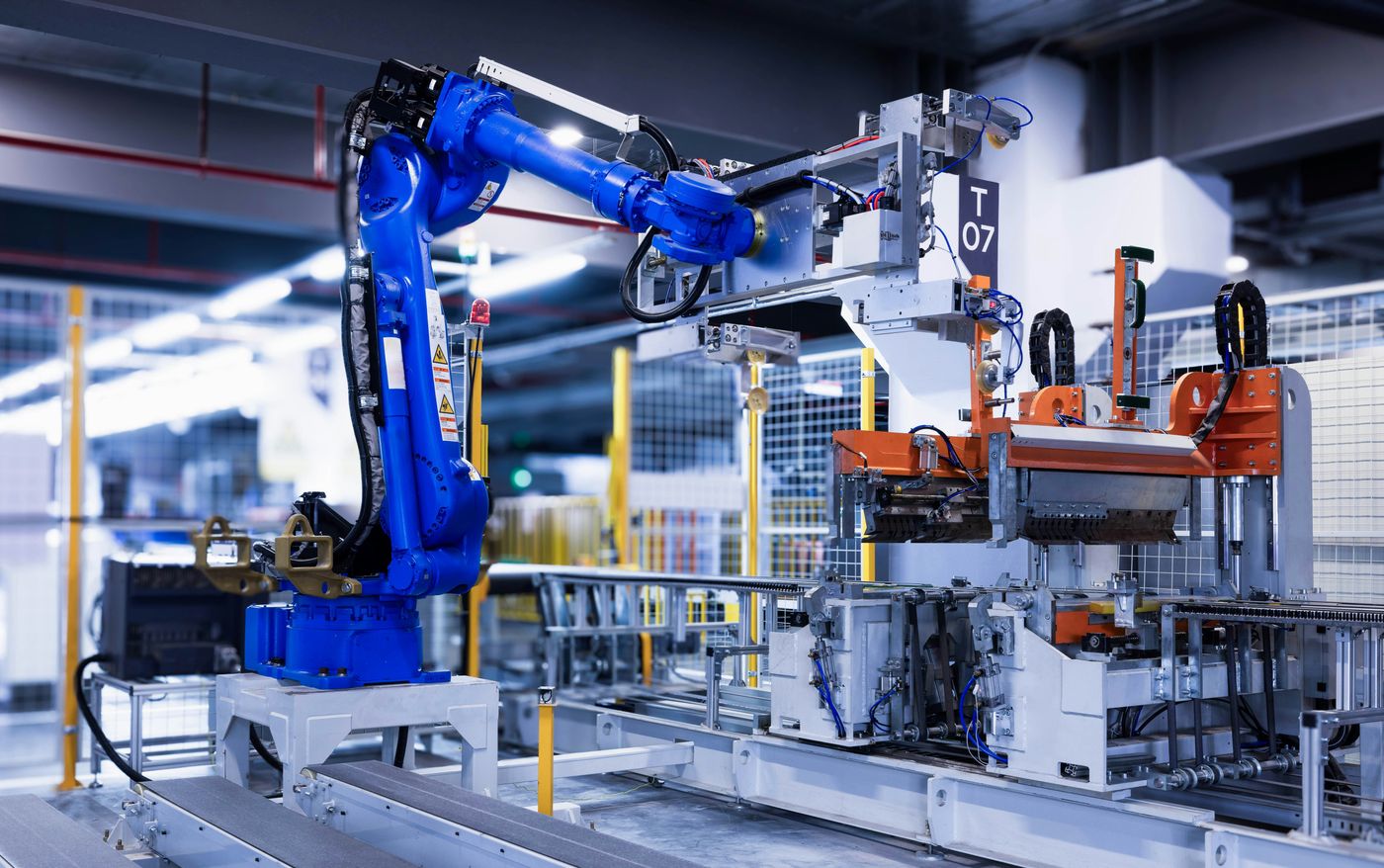
This has been a real year for robotics deployment. Humanoids moved from demo videos into scheduled production work at automotive plants. An airline put them to work in an airport terminal. Warehouse fleets kept expanding across logistics and food and beverage. Trade press coverage has been steady, and most of it is about capability: what the machine can lift, how fast it moves, how well it navigates.
Almost none of it is about month fourteen.
Month fourteen is when the demo is over, the integrator has moved on, the operators have stopped being impressed, and the fleet is just equipment that either runs or does not. That is the part of robotics nobody writes about, and it is the part that decides whether the investment paid off.
The failure is usually ownership, not engineering
When we get called to a floor where the fleet is underperforming, the root cause is almost never a design flaw. The machines were built fine. What is missing is that nobody owns them.
Every facility knows who owns the forklifts. There is a name, a PM schedule, a parts shelf, and a person who notices when something sounds wrong. Robots frequently arrive without any of that. They came in under a capital project, the project closed, and the machines quietly became everyone’s responsibility, which means nobody’s.
The symptoms are boring and predictable. Wheel tread on autonomous mobile robots wearing unevenly because nobody measures it. LiDAR and camera lenses fogging over in a facility that generates dust all day. Battery cycle counts nobody is tracking, so capacity degrades and the fleet mysteriously stops making it through second shift. End-of-arm tooling drifting out of calibration slowly enough that nobody catches it until scrap rates move.
None of those are hard problems. They are unassigned problems.
The economics of a stopped shift
It is easy to think about maintenance as a line item and compare quotes. That framing misses where the money actually goes.
A robot that goes down mid-shift does not cost you the repair. It costs you the shift. On an automated line, one stopped machine backs up everything upstream of it and starves everything downstream. If the cell was doing work that used to take four people, you do not have those four people standing by anymore.
Published fleet case studies from maintenance software vendors describe operations holding unplanned downtime well under two percent once structured tracking is in place. Treat the specific numbers with appropriate skepticism, since vendors publish their wins. The directional point holds up in the field: the gap between a fleet running in the mid-nineties and one running in the high nineties is not better hardware. It is whether a maintenance program exists.
Preventive work is cheaper than break-fix for the same reason it is cheaper on a truck fleet. You schedule it when the line is already down, you order the part before you need it, and you replace a wear item instead of the assembly it destroyed.
Why the builder is usually not the best servicer
This is not a criticism of the companies making robots. It is a structural observation.
Building robots and servicing robots are different businesses. Manufacturing rewards engineering depth, unit volume, and the next product generation. Field service rewards geographic density, technician headcount, parts logistics, and dispatch. One scales with better design. The other scales with people in vans in the right cities.
So service arms tend to lag deployment curves by years, and they are usually built to support one product line. That is fine until you look at an actual floor.
Most floors are not single-vendor. There is an AMR fleet from one maker, arms from another, a palletizer from a third, plus conveyor, safety systems, and a controls layer stitching it together. When something stops, the operator does not know which vendor owns the problem. Coordinating three OEMs to diagnose one line is a scheduling exercise before it is a technical one. Vendor-agnostic service exists because the floor is vendor-agnostic.
The technician question
The harder constraint underneath all of this is people. The work requires someone comfortable with mechanical, electrical, and controls problems on the same visit, plus the judgment to know when a symptom is the actual fault and when it is downstream of something else.
That profile has always been scarce. Training pipelines are standing up, including dedicated centers overseas focused specifically on humanoid service work and expanded apprenticeship funding in the United States, but those pipelines are years behind the deployment curve. Anyone planning a fleet expansion should assume the technician constraint is real and plan around it rather than through it.
Five things worth doing before the next machine arrives
Put a name on every machine. One person accountable, the same way you do it for critical production equipment.
Build the PM schedule off actual duty cycle, not the manual default. A robot running twenty hours a day is not on the same interval as one running six.
Track the unglamorous wear items. Tread, lens condition, battery cycles, belt tension, tool calibration. Most of the failures that cost you a shift announce themselves weeks in advance in one of those numbers.
Decide in advance who you call, by failure class. Not after the line stops.
Stock the parts that stop a shift, not the parts that are cheap. Those are rarely the same list.
Robo Reliance handles the part of robotics that happens after the press release. Multi-brand, vendor-agnostic field service and preventive maintenance for fleet owners and operators who need the machines to run on a Tuesday afternoon in year three.
https://www.roboreliance.com | 800-838-0156 | info@roboreliance.com